



Hello Cointribe! 🚀
What’s good, crypto crew? 🚀 It’s Saturday, February 21, 2026—and the market never sleeps. Here’s what’s been unfolding across the crypto space over the past 24 hours.
But first…
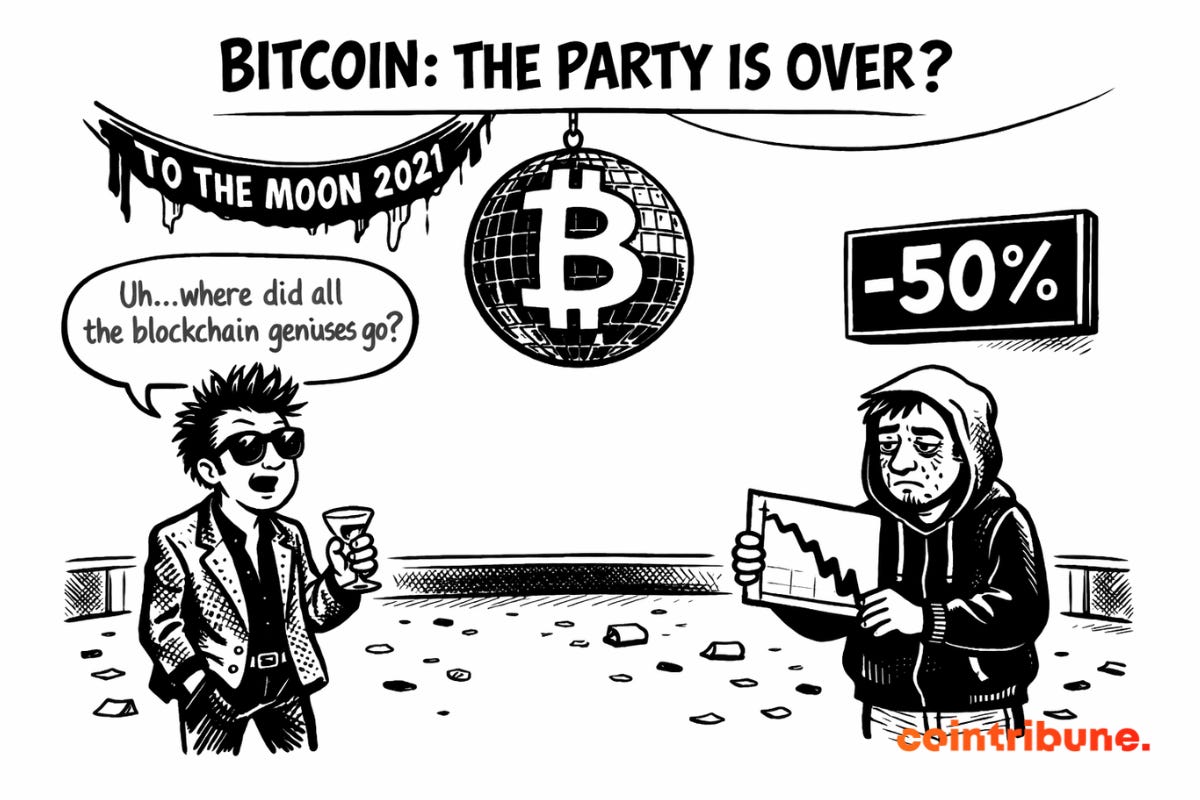
✍️ Cartoon of the day:
A quick look at the market…
🌡 Weather:
☀️ Sunny
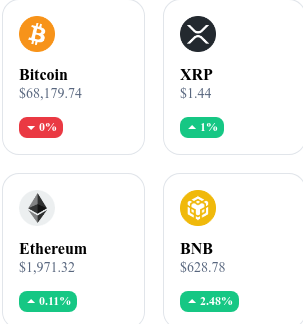

24h crypto recap! ⏱
😰 Could Quantum Fears Be Masking an Exhausted Crypto Cycle?
Bitcoin and Ethereum have faced sharp declines, with quantum computing cited as a possible threat. Analysts suggest these moves reflect market fatigue, sector rotation, and shifting investor priorities rather than immediate cryptographic risk. Ethereum’s deeper drop, 1.7 million dormant BTC, and growing AI investments highlight complex dynamics. Developers are quietly building post-quantum protections, but the discussion is focused on adoption cycles, strategic choices, and market sentiment rather than an imminent technological collapse.
👉 Read the article
💧 Ripple CEO Sees 90% Chance for U.S. Clarity Act Adoption
Ripple CEO Brad Garlinghouse predicts a 90% chance the U.S. Clarity Act will pass by April 2026. This bill aims to differentiate securities from commodities in crypto markets, potentially offering legal clarity for firms, strengthening stablecoins, and boosting institutional trust. Ongoing negotiations and regulatory adjustments will shape adoption. If approved, it could define investment strategies and compliance approaches for crypto companies, making the coming months critical for stakeholders to follow developments closely.
👉 Read the article
📊 TRM Labs Flags $141 Billion in Suspicious Stablecoin Activity in 2025
TRM Labs identifies roughly $141 billion in stablecoin flows tied to suspicious or illicit activity in 2025, a five-year high. While total stablecoin usage expanded, most illicit transactions were linked to sanctions evasion and risky networks. Regulators are increasing monitoring and pressure, but illicit use remains a small fraction of overall volume. Analysts emphasize transparency, compliance, and forensic tracking to safeguard market integrity and ensure the crypto ecosystem continues growing responsibly in the coming years.
👉 Read the article
🏦 February 2026: Comparing Top Crypto Exchange Offers
February 2026 brings competitive offers across centralized exchanges. Kraken provides a 3% deposit bonus, Binance offers lifetime fee discounts, and OKX and Bybit EU feature cashback and compliance-driven perks. As MiCA regulations shape the European crypto landscape, traders can optimize fees, bonuses, and onboarding incentives. Comparing platforms helps investors identify the best opportunities while navigating evolving rules. Strategic choices now may impact portfolio performance and transaction efficiency throughout the year.
👉 Read the article

🚀 Crypto of the Day: Hyperliquid (HYPE)
Our crypto for the day is HYPE, now approaching a critical technical juncture as tightening price action and compressing volatility point toward an imminent breakout. After trending lower from October into mid-January, HYPE carved out a base in the low $20s before staging a recovery. That rebound has since cooled into sideways movement, with price now hovering near $29.94 as the market waits for its next catalyst.
Volatility Compresses as Market Pauses
Bollinger Bands show HYPE trading slightly below the mid-band near $31.17, while upper resistance stands around $34.55 and lower support rests at approximately $27.80. The bands are narrowing, a signal that a larger expansion move may be approaching. At the same time, the Relative Strength Index sits around 50, reflecting neutral momentum and a balance between buyers and sellers rather than strong conviction in either direction.
Volume supports this consolidation narrative. Activity surged during the late-January rebound but has since moderated, suggesting traders are positioning rather than aggressively chasing price.
Whale Positioning Adds Another Layer
Derivatives data adds fresh intrigue. Coinglass reports that a Hyperliquid HYPE whale is holding roughly $2.87 billion in open positions, split almost evenly:
$1.44B in longs (49.9%), currently reflecting a $152M unrealized loss
$1.445B in shorts (50.1%), currently showing a $245M unrealized gain
The structure resembles a near-perfect hedge, but for now, short exposure is outperforming.
Key Levels to Watch
Technically, two zones stand out:
A push above $31–$34.5 could open the path toward the $38–$40 region
A break below $27.8 may expose HYPE to renewed downside toward the mid-$20s
With tightening volatility, neutral momentum, and massive leveraged exposure in play, HYPE appears primed for a significant move. The breakout, when it comes, is unlikely to be quiet.
📊 Real-time Performance (CMC)
💵 Current Price: $29.99
📉 24h Change: 4.92%
💰 Market Capitalization: $7.76B
🏅 CoinMarketCap Rank: #13
🪙 Circulating Supply: 258.93M HYPE
📊 Trading Volume (24h): $233.39M

📉 Bitcoin Network Activity Falls Nearly 50% Since 2021
Bitcoin’s network activity has declined by almost 50% compared with 2021 levels, reflecting a noticeable slowdown in visible on-chain usage. Core metrics such as daily transactions, active addresses, and total transfer volume have all trended lower over the past few years. This shift suggests that fewer participants are actively moving coins across the base layer, even as Bitcoin remains central to broader market discussions.
The drop does not necessarily signal structural failure. Instead, it points to changing behavior. During the 2021 cycle, heightened speculation, rapid price appreciation, and strong retail participation drove intense on-chain engagement. Today’s environment is markedly different, with consolidation phases and more cautious capital allocation reducing transactional urgency.
📊 What the Data Indicates
Fewer daily transactions: The number of confirmed transfers on the blockchain has dropped substantially from peak cycle levels.
Declining active addresses: Unique wallet participation has cooled, showing lower day-to-day engagement.
Reduced transfer volumes: The total value settled on-chain has weakened, signalling slower economic throughput.
Lower fee generation: With fewer transactions competing for block space, average transaction fees have softened, impacting miner revenue composition.
Together, these metrics reflect a network operating at a calmer pace compared with the frenzy of the previous bull cycle.
🔍 Shifting Usage Patterns
A decline in base-layer activity does not mean Bitcoin adoption has reversed. Instead, usage patterns are evolving. Some transactions may now occur off-chain through exchanges or custodial services, which reduces visible on-chain flows. Additionally, long-term holders appear more inclined to hold rather than move coins frequently, limiting transactional churn.
Market psychology also plays a role. Extended consolidation often dampens speculative turnover. When price volatility contracts, participants tend to transact less frequently, leading to lower observable network metrics.
🧠 Broader Implications
The near-50% activity reduction highlights a transition period rather than a collapse. Bitcoin’s ecosystem is maturing, with behavior shifting from rapid turnover toward longer holding cycles and alternative settlement layers. While traditional on-chain indicators show cooling engagement, they capture only part of the broader adoption landscape.
Future growth may depend less on speculative spikes and more on renewed utility, institutional integration, and infrastructure expansion. For now, Bitcoin’s network appears quieter—but not necessarily weaker—as the market navigates a slower, more measured phase.
