



Hello Cointribe! 🚀
Hey, crypto fans! 🚀 Tuesday, February 10, 2026—here’s your roundup of the top crypto headlines from the past 24 hours.
But first…
✍️ Cartoon of the day:

A quick look at the market…
🌡 Weather:
☀️ Sunny
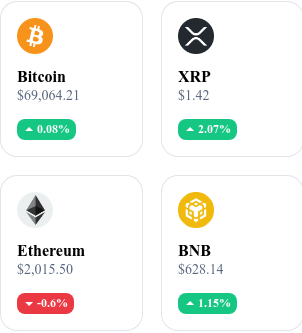

24h crypto recap! ⏱
📈 Bitcoin Investors Return to Accumulation, Says Glassnode
In February 2026, Bitcoin briefly dropped below $61,000 before bouncing back, sparking a notable increase in investor accumulation. Glassnode data shows the accumulation score reaching its highest since late November, reflecting broad buying across wallet types. Analysts interpret this trend as renewed confidence in Bitcoin’s long-term outlook, with key resistance around $70,000 and models suggesting higher year-end targets.
👉 Read the article
⚠️ Block Plans Potential Job Cuts Amid Bitcoin Strategy Shift
Block Inc. announced potential reductions affecting up to 10 percent of staff during a company-wide restructuring. Focus is shifting toward Bitcoin products and services, with Cash App and Square operations being streamlined. The firm continues investing in Bitcoin infrastructure despite internal changes. Analysts expect upcoming earnings to reflect these strategic adjustments and assess how the company adapts to changing market conditions.
👉 Read the article
🏛️ Powell Investigation Delays Warsh Confirmation at Fed
The U.S. Senate faces a standoff as Kevin Warsh’s Federal Reserve confirmation is blocked pending a DOJ investigation into Jerome Powell. Treasury officials proposed simultaneous hearings, but opposition continues. The probe concerns Fed renovation expenses and has heightened political tensions. Powell describes the process as politicized. Financial markets, including Bitcoin, have responded to the uncertainty, with investors monitoring developments closely.
👉 Read the article
💎 BitMine Buys 20,000 ETH Amid Market Downturn
BitMine executed a large Ethereum purchase during a market downturn, acquiring 20,000 ETH as prices fell sharply. The firm now holds over 4.29 million ETH, aiming for 5 percent of the total supply. Its strategy avoids debt and leverage, focusing on staking yields, contrasting competitors who use leverage. Despite significant unrealized losses, leadership remains committed to long-term accumulation and continued industry participation, viewing the crash as a strategic buying opportunity.
👉 Read the article

👑 Crypto of the Day: Bitcoin (BTC)
Bitcoin Edges Back to $70,000 as Whales Accumulate
Bitcoin has returned to $70,000 following a period of market volatility, reflecting a cautious recovery rather than a dramatic surge. While overall market activity remains subdued, whales have been quietly increasing their Bitcoin positions during recent dips, signaling potential confidence in the cryptocurrency’s medium- to long-term prospects.
Whales Increase Holdings
Recent analysis shows that whales transferred nearly 67,000 $BTC to accumulator addresses, marking the largest inflow of the current market cycle. This activity indicates that large holders are carefully absorbing supply, which could help stabilize prices over time. The accumulation reflects a strategic approach rather than reactive trading, suggesting that whales are positioning themselves for longer-term potential.
Social Media Interest Highlights Market Buzz
At the same time, Bitcoin is drawing attention on social media platforms, with conversations focusing on investment strategies, market cycles, price predictions, and comparisons with other cryptocurrencies like Ethereum. These discussions reveal Bitcoin’s ongoing relevance not only as a trading asset but also as a focal point for broader debates about risk, potential returns, and macroeconomic impacts on its price.
Future Growth Depends on Continued Accumulation
Joao Wedson, founder of Alphractal, has noted that if Bitcoin remains in an accumulation phase similar to late 2022—lasting roughly ten months—the cryptocurrency could reach between $260,000 and $282,000 by 2029. However, such projections rely on sustained accumulation, sufficient supply absorption, and a gradual rebuilding of demand, emphasizing that long-term growth is not guaranteed.
📊 Real-time Performance (CMC)
💵 Current Price: $68,913.03
📉 24h Change: -0.03%
💰 Market Capitalization: $1.37T
🏅 CoinMarketCap Rank: #1
🪙 Circulating Supply: 19.98M BTC
📊 Trading Volume (24h): $45.78B

🧠 CoinShares: Only a Small Slice of Bitcoin Is Vulnerable to Quantum Risk
🔐 Quantum Concerns Remain Theoretical, Says CoinShares
Digital asset manager CoinShares has weighed in on growing worries that quantum computers might one day threaten Bitcoin’s cryptographic security. The firm’s latest research argues that the near‑term risk is extremely limited and largely theoretical rather than an imminent danger to the network. According to CoinShares, only a tiny fraction of Bitcoin is realistically exposed to quantum attacks—far less than some sensational estimates circulating in the market.
📌 Key Facts from the CoinShares Assessment
Only a small portion of Bitcoin is at realistic risk: CoinShares estimates just 10,230 BTC (worth about $719 million) are held in addresses with public cryptographic keys exposed and theoretically attackable by future quantum machines.
The majority of BTC is safe for now: Roughly 1.62 million BTC are in wallets with balances under 100 BTC or in modern address types where keys remain hidden. Cracking these would take centuries even under highly optimistic quantum assumptions.
Quantum computers today are far from capable: realistically, breaking Bitcoin’s cryptography would require millions of fault‑tolerant qubits, far beyond current systems like Google’s 105‑qubit machines.
Risk is mostly theoretical, not immediate: CoinShares says that while quantum algorithms like Shor’s could theoretically threaten elliptic‑curve signatures, the practical threat is decades away, giving the ecosystem time to prepare or upgrade if needed.
🧠 Broader Context and Debate in the Community
CoinShares’ research challenges widespread fears that quantum computing could soon destabilize Bitcoin’s security model. Many high‑profile figures in the crypto world—including some developers and analysts—argue that actual quantum threats are distant and manageable.
At the same time, a minority of experts urge early planning and upgrades, noting that once powerful quantum systems arrive, legacy wallet exposures could be exploited more easily.
In essence, CoinShares positions the quantum question not as an urgent market risk but as a long‑term engineering challenge. The research suggests that Bitcoin’s core network—including its fixed 21 million supply cap and proof-of-work consensus—would remain intact even in a future with advanced quantum computing and that most holders are not in immediate danger from this class of threat.
