


Hello Cointribe! 🚀
Today is Saturday, August 2, 2025, and as every Tuesday through Saturday, we bring you the key crypto news you shouldn’t miss from the past 24 hours.
But first…
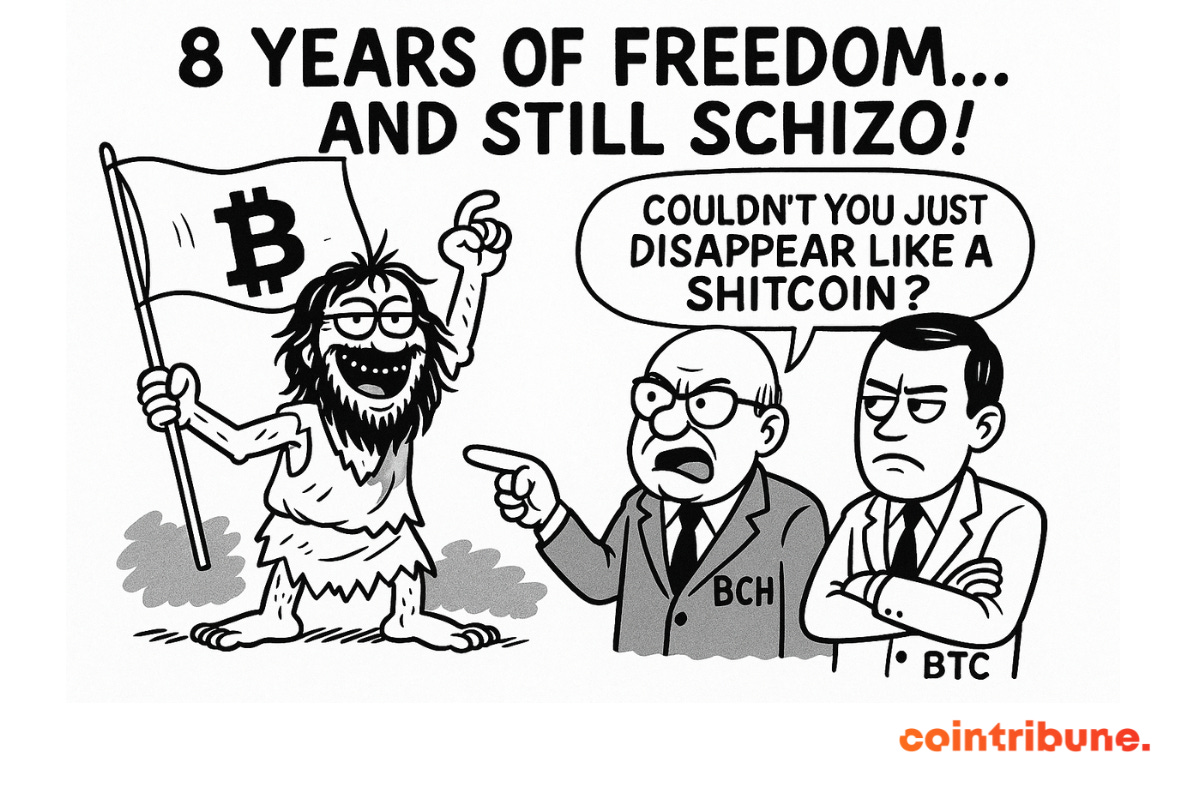
✍️ Cartoon of the day:
A quick look at the market…
🌡 Weather:
⛈️ Stormy
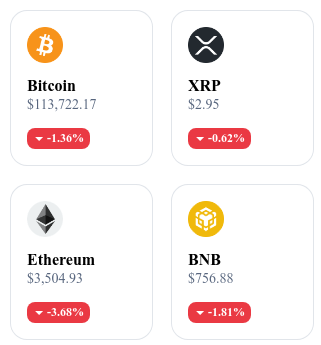

24h crypto recap! ⏱
🌍 Crypto Market Turns Jittery Amid Renewed Trade Tensions
The resurgence of global trade tensions, coupled with mixed macroeconomic signals, has pushed Bitcoin and crypto-related equities lower, amplifying market volatility. This trend has deepened the correlation between digital assets and broader global risk factors, raising short-term stability concerns.
👉 Read the full article
🇺🇸 SEC Launches “Project Crypto” to Clarify and Modernize U.S. Regulation
Announced in late July 2025, “Project Crypto” aims to overhaul the U.S. regulatory framework for digital assets by bringing greater clarity to crypto classifications and supporting innovative models like super apps. The initiative promotes self-custody and seeks to attract innovation to the U.S. while reducing legal gray areas.
👉 Read the full article
💰 Tether Posts $5.7 Billion in Profits Over Six Months, Strengthening Its Dominance
Tether has reported $5.7 billion in profits over the past six months, highlighting the strength of its operating model and the depth of its liquidity. This performance further cements its leading position in the stablecoin ecosystem, outpacing its closest competitors.
👉 Read the full article
🏨 Metaplanet Raises $3.7 Billion to Build Massive Bitcoin Treasury
The Japanese firm plans to issue up to 555 billion yen in perpetual preferred shares between August 2025 and August 2027 to fund the acquisition of 210,000 BTC—an ambitious allocation representing a significant portion of its market value. This bold strategy aims to position Metaplanet as a major player with a heavily Bitcoin-backed treasury.
👉 Read the full article

🪙 Crypto of the Day: Algorand (ALGO)
🧠 What’s the innovation and added value?
Algorand is a Layer 1 blockchain designed to achieve scalability, security, and low energy consumption through its pure proof-of-stake (PPoS) protocol, developed by Turing Award winner Silvio Micali.
Its cryptographic sortition algorithm randomly selects validators for each block, ensuring strong decentralization without requiring massive stakes. The network offers ultra-low latency, minimal fees, and instant finality—while remaining carbon-neutral, or even carbon-negative in terms of emissions.
💰 The ALGO Token: Utility and Benefits for Holders
ALGO is used to pay transaction fees, secure the network through staking, and participate in governance. “Governors” vote on proposals and share rewards based on their level of participation. Thanks to its lightweight consensus architecture, any ALGO holder can join the process without intensive hardware, encouraging broad and fluid participation.
ALGO also supports ecosystem growth through developer incentives, stablecoin issuance, and tokenization of real-world assets (RWAs).
📊 Recent Performance (as of August 2, 2025)
Current Price: $0.23399 USD
24h Change: –2.60%
Market Cap: ≈ $2.034 billion USD
CoinMarketCap Rank: #47
Circulating Supply: ≈ 8.692 billion ALGO
24h Trading Volume: ≈ $104.8 million USD

📅 August 1, 2017: The Day Bitcoin Defied Its Masters
Eight years after one of the most decisive days in its history, Bitcoin commemorates a hard-won independence. On August 1, 2017, the community took control of its destiny, enforcing a software fork without the consent of the mining powerhouses. Behind this pivotal moment lies an ideological and technical battle that continues to shape the network’s evolution.
When the Grassroots Took Charge: A Look Back at SegWit Activation
August 1, 2017 marked the activation of the Segregated Witness (SegWit) soft fork—a protocol upgrade that changed how transaction data is stored within blocks. What made this shift unique was that it was not driven by miners, but by users themselves via BIP148, a User Activated Soft Fork (UASF) proposal. This mechanism enabled the community to push through a technical direction in defiance of certain economic elites within the ecosystem.
SegWit was more than a mere technical tweak. It represented a showdown over protocol governance. By reducing the weight of transaction signatures in blocks, SegWit allowed for improved transaction throughput without increasing the block size beyond 1MB. This optimization laid the foundation for second-layer solutions such as the Lightning Network, aimed at boosting scalability.
Opposing those who advocated for a straightforward increase in block size, SegWit supporters championed a more decentralized vision of Bitcoin—one that prioritized software innovation and modularity over brute mining force. Today, August 1 is seen by many developers and users as a symbol of grassroots technological sovereignty.
The Birth of Bitcoin Cash: An Alternative to the Original Vision
That same day also saw the emergence of a new asset: Bitcoin Cash (BCH). Created through a hard fork by those who believed increasing block size was the better solution to network congestion, BCH—backed prominently by Roger Ver—introduced 8MB blocks, taking a radically different path from SegWit.
This fork created a lasting rift in the Bitcoin world. On one side, Bitcoin (BTC) forged ahead with innovations like Taproot and the Lightning Network. On the other, Bitcoin Cash focused on fast, low-fee on-chain payments.
Despite a strong initial following and significant financial backing, Bitcoin Cash failed to rival Bitcoin’s momentum. BTC’s ecosystem continued to expand around a diverse infrastructure, attracting institutional capital and new entrants thanks to its solid technical foundation. Bitcoin Cash, meanwhile, has largely faded into a niche corner of the broader crypto market.
The 2017 split ultimately gave rise to two opposing visions—one of which has clearly prevailed over time: technical and community-driven decentralization has outweighed centralized interests, even when the latter command superior computational power.
