



Hello Cointribe! 🚀
Today is Tuesday, November 18, 2025, and as every day from Tuesday to Saturday, we bring you the top stories from the past 24 hours you shouldn’t miss!
But first…
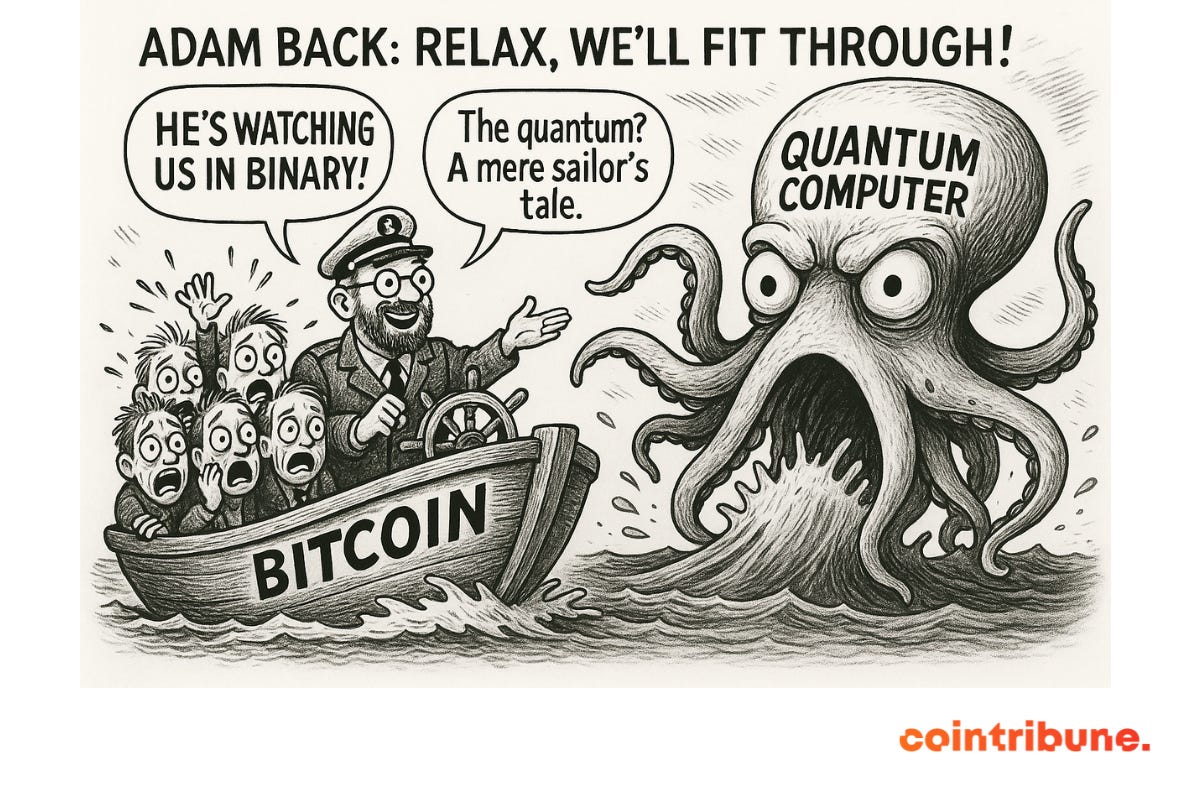
✍️ Cartoon of the day:
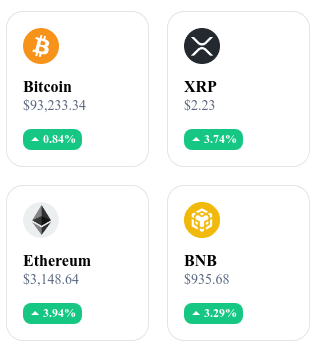
A quick look at the market…
🌡 Weather:
☀️ Sunny

24h crypto recap! ⏱
💼 Mt Gox moves $953M in Bitcoin after eight months of inactivity
The former Japanese exchange transferred approximately $953 million worth of BTC after nearly eight months without recorded movement. This type of operation fuels fears of a potential impact on the Bitcoin market.
👉 Read the full article
🏢 U.S. Securities and Exchange Commission removes crypto from 2026 priorities
The American regulator has eliminated any explicit mention of digital assets from its list of priorities for the 2026 fiscal year, a break from previous years. This shift may signal a normalization of crypto regulation rather than a targeted crackdown.
👉 Read the full article
📉 DappRadar shuts down, RADAR token plunges 30%
The DeFi analytics platform announced its closure after raising $7.27M between 2019 and 2021. Its RADAR token immediately dropped by around 30%. This closure highlights current pressure on Web3 projects lacking robust business models.
👉 Read the full article
🔐 Adam Back calms fears around Bitcoin and quantum computing
Blockstream’s CEO says the Bitcoin network won’t be threatened by quantum computing for “20 to 40 years,” estimating 8,000 logical qubits would be needed to break SHA-256. He reminds that post-quantum algorithms already exist and can be implemented if necessary.
👉 Read the full article

Crypto of the Day: The Graph (GRT)
🧠 Innovation and Value Proposition
The Graph is a decentralized protocol for indexing and querying blockchain data, often dubbed the “Google of blockchains.” It enables developers to create “subgraphs”—open APIs that define how on-chain data is structured, indexed, and accessed—then query them using GraphQL without managing the full node infrastructure themselves.
The protocol supports many chains (Ethereum, Polygon, Arbitrum…) and aims to expand further, enhancing its value in the Web3 ecosystem as a core infrastructure layer for decentralized applications, analytics, and AI.
💰 The Token
GRT is the native token of The Graph network. It serves several purposes: paying query fees (by data consumers), rewarding ecosystem contributors (indexers, curators, delegators), and securing the protocol’s integrity through staking.
Holders can delegate their GRT to an indexer to indirectly participate in indexing activities and earn rewards. The token’s economic model is tightly linked to real network usage: as queries and projects using subgraphs increase, so too could demand for GRT.
📊 Real-Time Performance
💵 Current Price: ≈ $0.05735
📈 24h Change: +4.89%
💰 Market Cap: ≈ $608.26 million
🏅 CoinMarketCap Rank: #92
🪙 Circulating Supply: ≈ 10.604 billion GRT
📊 24h Trading Volume: ≈ $33.99 million

Ethereum following in Bitcoin’s footsteps? A bullish supercycle ahead, says Tom Lee
Could Ethereum be on the verge of a historic rise comparable to Bitcoin’s past surges? That’s the view of renowned crypto expert Tom Lee, who envisions a “supercycle” for the world’s second-largest blockchain. His analysis, based on historical data and current signals, encourages a reevaluation of Ethereum’s trajectory for the coming years.
Tom Lee compares Ethereum to Bitcoin in 2017
Tom Lee, Executive Chairman of BitMine Immersion Technologies, draws a parallel between Ethereum’s current position and Bitcoin’s in 2017 during its spectacular rally. At the time, Lee advocated a modest allocation to Bitcoin, then trading around $1,000. Seven years later, that long-term bet proved extremely profitable, despite several sharp corrections. According to Lee, these fluctuations aren’t anomalies but part of a broader cycle driven by exponential growth. He refers to this as a “supercycle,” a prolonged bullish phase interspersed with severe pullbacks but underpinned by strong fundamentals.
Today, Ethereum could follow a similar path, even though it has lagged behind Bitcoin in 2025. In August, ETH peaked near $4,950, compared to BTC’s $126,000 in October. Since then, both have declined, but Ethereum has dropped more—about 35%, versus Bitcoin’s 24%. Lee doesn’t see this as a long-term weakness, but rather an opportunity for those who can handle volatility.
Positive on-chain signals and increasing accumulation
Beyond price action, certain on-chain indicators support the idea of a potential reversal. A key signal, according to Lee, is the growing accumulation of Ethereum by long-term holders. Currently, ETH is trading around $3,150—roughly 8% above its realized price average of $2,895. This threshold is often seen as a strong foundation for a bullish trend.
Lee also believes the recent drop may be the result of technical liquidations by weakened market makers. These sharp movements, while painful, don’t invalidate Ethereum’s long-term outlook, in his view. Rather, they offer opportunities for long-term investors who can withstand the “existential moments” inherent to any supercycle. In short, major gains are reserved for those who can endure uncertainty without panic.
The idea of a supercycle for Ethereum is sparking debate—but it also offers valuable insight into market dynamics. For Lee, the key is staying engaged through turbulence, guided by fundamental signals. Whether one agrees with him or not, his view prompts reflection on how crypto cycles unfold—and who truly manages to benefit from them.
