



Hello Cointribe! 🚀
Today is Tuesday, October 21, 2025, and as every day from Tuesday to Saturday, we bring you the top crypto news from the past 24 hours you shouldn’t miss!
But first…
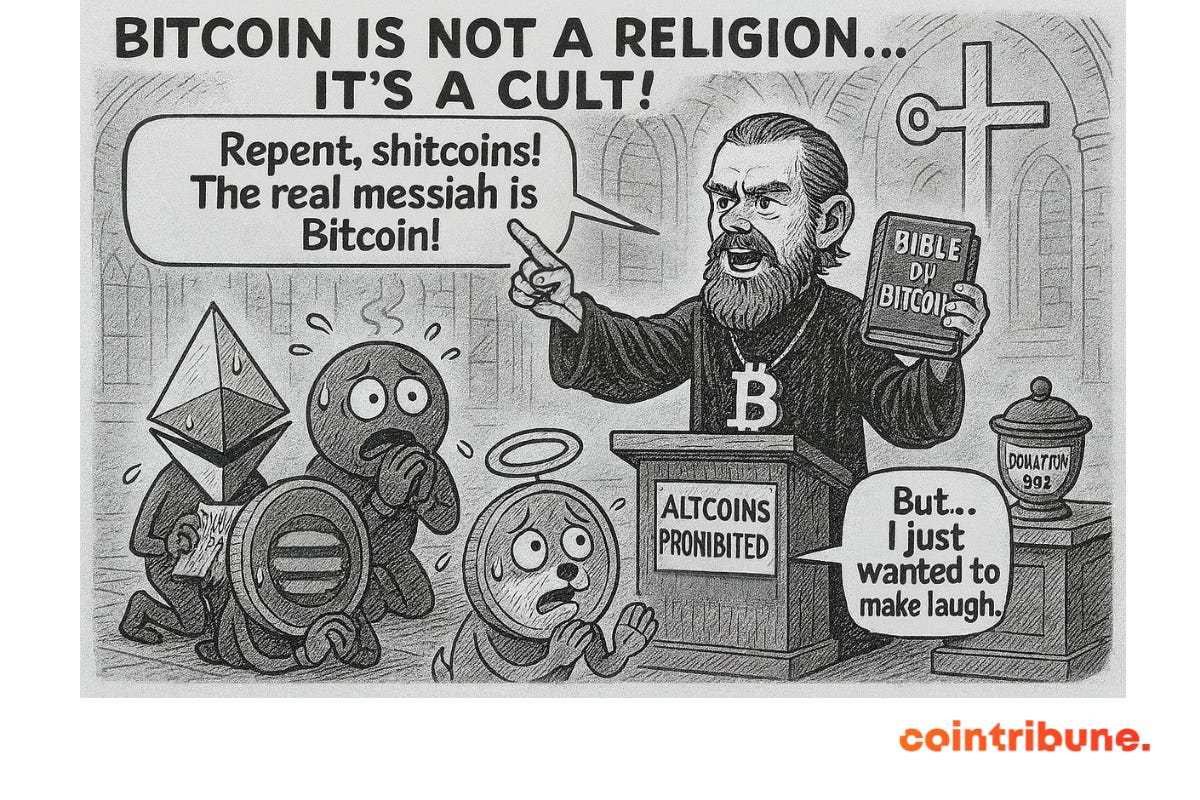
✍️ Cartoon of the day:
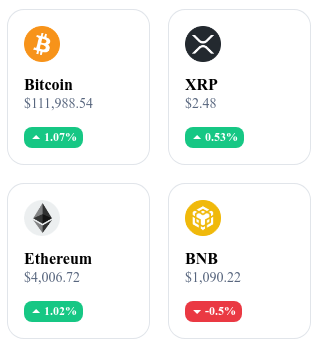
A quick look at the market…
🌡 Weather:
☀️ Partly sunny

24h crypto recap! ⏱
📉 Bitcoin Spot ETFs Record Four Consecutive Days of Outflows
U.S. spot Bitcoin ETFs have posted four straight days of net withdrawals, totaling over $730 million in outflows. Analysts attribute this decline to institutional profit-taking and market consolidation after BTC’s surge above $120,000.
👉 Read the full article
🚨 CZ (Binance) Warns of Massive Memecoin Scam Wave
Binance founder Changpeng Zhao has issued a warning about a surge in memecoin-related scams, often spread through fake accounts on X and Telegram. He urges investors to verify smart contracts before any transaction, noting that most of these projects disappear shortly after launch.
👉 Read the full article
🏦 RWA Market Nears $35 Billion Amid Boom in Tokenized Treasury Bills
The Real World Assets (RWA) market has reached nearly $35 billion, driven by the tokenization of U.S. Treasury bills. Platforms such as Ondo Finance and Backed Finance are seeing strong growth, supported by the entry of institutional investors into DeFi.
👉 Read the full article
⚙️ Bitcoin Mining Eases Slightly, but Record Hashrate Keeps Pressure High
Bitcoin’s mining difficulty has fallen by 0.8%, offering a brief respite to miners. However, the hashrate remains at a record 680 EH/s, continuing to weigh on profitability and pushing operators to upgrade their hardware to stay competitive.
👉 Read the full article

Crypto of the Day: Ondo Finance (ONDO)
Innovation and Added Value 🧠
Ondo Finance is a pioneering platform in the tokenization of real-world assets (RWA), aiming to bridge traditional finance and DeFi. In practice, Ondo issues financial products backed by real-world assets — such as U.S. Treasury bills (USTB), money market funds, and short-term bonds — and makes them accessible on-chain through regulated, yield-bearing tokens.
The protocol operates under U.S. compliance standards (notably through the Ondo U.S. Treasury Bill Token fund, managed by Ondo Capital Management), ensuring transparency and institutional credibility. Ondo Finance positions itself as a key player in the evolution of regulated DeFi, enabling investors to earn stable yields while remaining fully within the Web3 ecosystem.
The Token 💰
The ONDO token is the protocol’s governance asset, allowing holders to vote on strategic decisions such as new tokenized product launches, yield management, and incentive distribution. Token holders can also participate in staking and liquidity programs within the Ondo ecosystem.
A portion of the revenue generated from the platform’s financial products is redistributed to the DAO, creating a circular economy connecting investors, validators, and developers. With a total supply capped at 10 billion tokens, Ondo combines community governance with institutional adoption, providing a credible bridge between traditional markets and on-chain finance.
Real-Time Performance 📊
💵 Current Price: 0.738 USD
📈 24h Change: +1.86 %
💰 Market Cap: 1,024,600,000 USD
🏅 Rank on CoinMarketCap: #92
🪙 Circulating Supply: 1,387,000,000 ONDO
📊 24h Trading Volume: 168,400,000 USD

Jack Dorsey: “Bitcoin Is Not a Crypto”
Jack Dorsey, a key figure of the web and outspoken Bitcoin advocate, has once again shaken the crypto world by declaring that “Bitcoin is not a crypto.”
What seems like a semantic nuance actually raises deeper questions about Bitcoin’s identity and its role in the digital economy. By opposing Bitcoin to all other crypto assets, Dorsey introduces a radically different monetary interpretation — one that challenges investors, developers, and regulators alike.
Bitcoin as a Currency Apart, According to Dorsey
The Twitter cofounder and CEO of Block is no stranger to provocative statements about Bitcoin. But this time, by asserting that “Bitcoin is not a crypto,” he seeks to redefine the concept itself. Dorsey grounds his reasoning in Satoshi Nakamoto’s 2008 white paper, which describes a “peer-to-peer electronic cash system” — notably, without ever using the word “crypto.”
For Dorsey, that omission is crucial. Bitcoin, he argues, was never meant to be lumped together with other crypto assets. It should be seen as a monetary instrument, a tool for digital sovereignty and financial disintermediation. By reinforcing this distinction, Dorsey aims to separate Bitcoin from the speculative world of altcoins and utility tokens often linked to volatile or unfinished projects.
This vision fits within his broader ambition to build a self-contained monetary identity for Bitcoin — one that could pave the way toward a more institutional, stable role, far removed from today’s “crypto” imagery.
Ideological and Financial Implications of a Deliberate Divide
Dorsey’s statement reignites a long-standing divide between Bitcoin maximalists and advocates of a pluralistic blockchain ecosystem. On one side stand those who view Bitcoin as the only true decentralized money; on the other, those who promote experimentation, interoperability, and technological diversity.
To the maximalists, Bitcoin is an end in itself. Other cryptocurrencies, they argue, dilute its purpose by reintroducing elements of speculation, private governance, or gadget-driven innovation. They emphasize Bitcoin’s simplicity, robustness, and programmed scarcity — qualities that, in their view, make it the ultimate digital safe haven.
Critics counter that Bitcoin still faces major hurdles in scalability, transaction fees, and speed, and that its limited use as a medium of exchange undermines its claim to being a true currency.
Dorsey’s stance also aligns with his business interests. His company Block builds payment infrastructure centered on Bitcoin, while Spiral supports open-source protocol development in the Bitcoin ecosystem. Declaring that “Bitcoin is not a crypto” therefore serves both an ideological and strategic purpose — reinforcing Bitcoin’s singular status while advancing Dorsey’s industrial vision.
