



Hello Cointribe! 🚀
Happy Friday, crypto crew! 🚀 It’s February 13, 2026, and here’s a quick look at the hottest crypto moves from the past 24 hours. Let’s dive in!
But first…
✍️ Cartoon of the day:

A quick look at the market…
🌡 Weather:
⛈️ Stormy
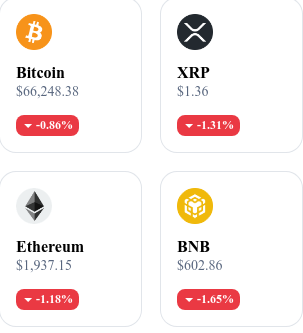

24h crypto recap! ⏱
🛑 Mike Novogratz Says Speculation Phase Has Ended
Mike Novogratz, CEO of Galaxy Digital, stated that the era of pure speculation in crypto may be ending as institutional participation grows. He pointed to increased involvement from traditional financial firms and long‑term holders as signs of maturation. Novogratz emphasized that fundamentals increasingly matter in asset pricing. Market observers note improved liquidity and deeper trading books, which could reduce volatility. His comments reflect a broader debate about the evolving dynamics of crypto markets.
👉 Read the article
📊 Ondo Finance Enables Tokenized US Stocks as DeFi Loan Collateral
Ondo Finance now allows tokenized U.S. stocks to serve as collateral for decentralized finance loans, integrating Chainlink price data to support valuations. The feature enables broader asset participation in DeFi lending markets and offers users new mechanisms to leverage traditional equities within crypto protocols. Developers highlight enhanced risk pricing and real‑time price feeds as key safeguards. The rollout reflects growing convergence between traditional securities and decentralized financial services.
👉 Read the article
🚫 Binance Dismisses Rumors of Massive Withdrawals
Binance has denied circulating rumors about widespread user withdrawals, labeling them as unfounded and inaccurate. The crypto exchange cited normal liquidity movements and routine operational flows to counter claims of instability. Binance reiterated its commitment to transparency and user fund security, urging stakeholders to rely on verified data rather than speculation. Market analysts note the importance of clear communication in maintaining confidence during price fluctuations. The company continues to monitor activity.
👉 Read the article
📈 JPMorgan See 2026 Crypto Rebound Fueled by Institutional Flows
JPMorgan Chase projects a rebound in cryptocurrency markets during 2026, attributing momentum to increased institutional capital flows. The bank’s analysts point to growing allocations from pension funds and asset managers as potential catalysts. They also note improving infrastructure and regulatory progress in some jurisdictions. While cautioning that volatility remains inherent, JPMorgan suggests that institutional participation could support deeper liquidity and more stable price dynamics as markets evolve through the year.
👉 Read the article
⚖️ Bankman-Fried Seeks Retrial, Questions Fairness of FTX Trial
Former FTX CEO Sam Bankman-Fried has requested a retrial, claiming that the initial proceedings were unfair and biased. His legal team argues that media coverage and courtroom decisions compromised impartiality. The motion highlights ongoing debates over judicial transparency and defendant rights in high-profile cryptocurrency cases. Observers note that the outcome could influence future litigation involving crypto executives and underscore challenges in balancing public interest, media scrutiny, and fair trial standards.
👉 Read the article

🚀 Crypto of the Day: Aster (ASTER)
ASTER Eyes March Launch as Unlock Pressure Nears
Our crypto pick for today is Aster (ASTER). The token has been gaining ground ahead of its March mainnet launch. This type of move often happens when a network event is approaching, as traders position themselves before new features go live.
Earlier this month, ASTER recovered from its early February drop and started to stabilize. From February 5 onward, each pullback held above the previous one, creating a pattern of higher lows that points to steady buying interest. The price is now trading close to $0.72, with rising volume supporting the move. The increase in activity suggests that market participants are preparing for the launch rather than reacting after the fact.
Mainnet as a Catalyst for Utility
The March rollout is expected to act as a clear catalyst, as it is set to introduce staking, governance, and synthetic markets into the ecosystem, broadening how the network will function and how the token can be used. These features are designed to connect the asset more closely to platform activity rather than simple speculation.
As the project prepares to move from development into live operation, attention is gradually shifting. Instead of focusing only on roadmap goals and planned upgrades, the market is beginning to look ahead to how the network may perform once those tools are fully active and available to users.
While this development supports the broader outlook, supply dynamics remain a crucial part to consider.
Monthly Unlocks in View
Starting February 17, 2026, around 78.48 million ASTER tokens—about 0.98% of the total supply—will be released into circulation every month. At current prices, that equates to roughly $56 million entering the market regularly. Each unlock introduces a fresh supply, which can create added selling pressure if demand does not match it.
With the first release only days away, short-term volatility cannot be ruled out. If buyers absorb the new tokens and the current structure holds, momentum may carry into March. However, these recurring unlocks are likely to act as areas where the market pauses and reassesses direction.
📊 Real-time Performance (CMC)
💵 Current Price: $0.7088
📉 24h Change: -2.95%
💰 Market Capitalization: $1.75B
🏅 CoinMarketCap Rank: #37
🪙 Circulating Supply: 2.47B ASTER
📊 Trading Volume (24h): $233.91M

🎯 Saylor Doubles Down on Strategy’s Bitcoin Bet
🚫 No Plans to Sell Bitcoin
Michael Saylor, executive chairman of Strategy, has firmly dismissed speculation that the company might sell part of its Bitcoin holdings during the recent market downturn. As volatility shakes investor confidence, Saylor made it clear that Strategy remains fully committed to its long-term Bitcoin accumulation plan.
He stated that the company has enough liquidity to operate for more than two and a half years without selling any Bitcoin. Even in an extreme scenario where BTC falls as low as $8,000, the company would seek to refinance its debt rather than liquidate its holdings. The message is straightforward: selling is not part of the strategy.
🧩 The Core of Strategy’s Approach
Strong liquidity position: Strategy can meet operational costs and financial obligations without touching its Bitcoin reserves.
Ongoing accumulation: The company intends to continue buying Bitcoin on a recurring basis, regardless of price swings.
Refinancing over liquidation: Even in severe downturns, debt restructuring would take priority over asset sales.
Long-term value thesis: Bitcoin is viewed as a strategic reserve asset with superior long-term potential.
⚖️ Rising Pressure From the Market
Despite this firm stance, Strategy faces mounting pressure. The company has reported significant unrealized losses tied to Bitcoin’s price decline, and its stock performance has reflected investor concerns. Growing short interest suggests that some market participants doubt the sustainability of this highly leveraged Bitcoin strategy.
Additionally, raising new capital in a weak market environment could result in dilution for shareholders, adding another layer of complexity to Strategy’s path forward.
🔭 A Long-Term Conviction Play
Saylor’s position reflects a belief that short-term volatility does not invalidate Bitcoin’s long-term value proposition. Rather than adjusting strategy in response to market cycles, Strategy continues to operate on the assumption that Bitcoin will appreciate significantly over time.
Whether this unwavering approach proves visionary or risky will depend on how future market cycles unfold—but for now, the company’s direction remains unchanged.
