



Hello Cointribe! 🚀
Today is Tuesday, 02 December 2025, and as every day from Tuesday to Saturday, we bring you a summary of the key news from the last 24 hours that you shouldn’t have missed!
But first…
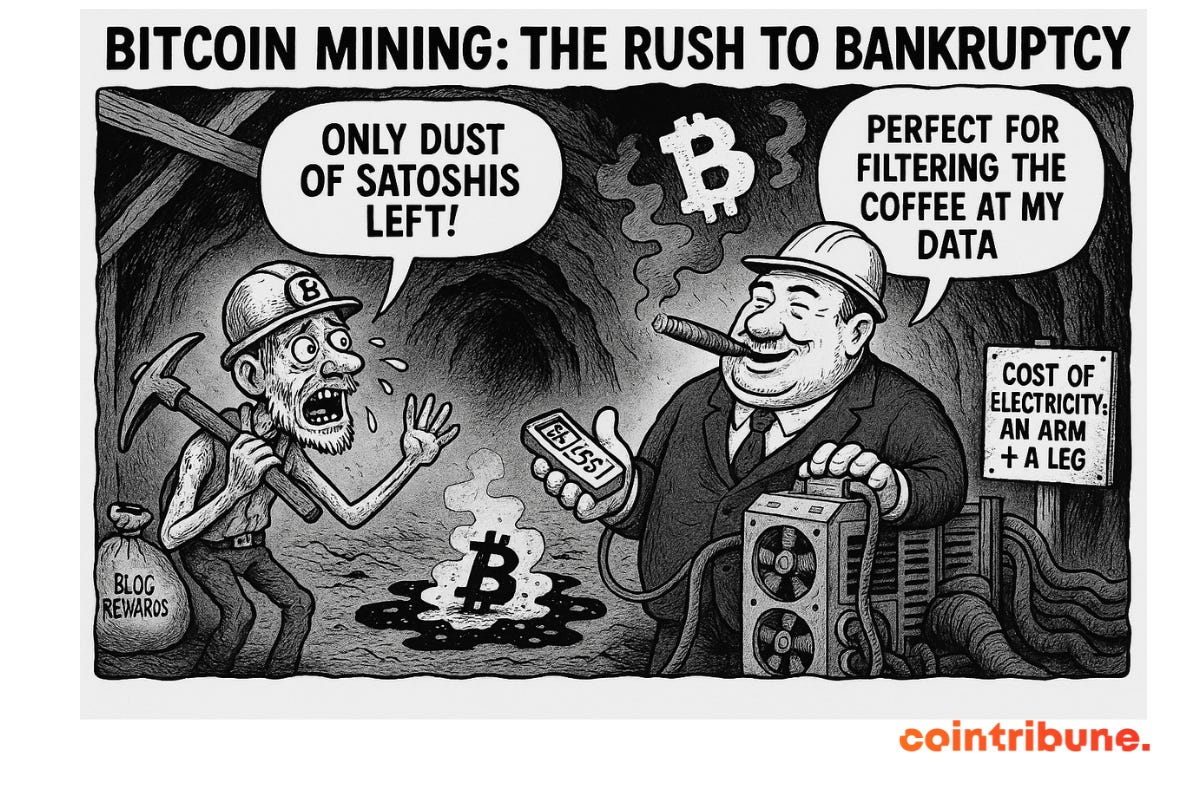
✍️ Cartoon of the day:
A quick look at the market…
🌡 Weather:
☀️ Sunny

24h crypto recap! ⏱
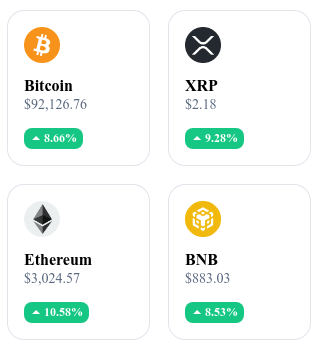
📈 Bitcoin, Ethereum, XRP, and Dogecoin rise by ~10% driven by renewed institutional interest
A coordinated rally pushes Bitcoin back to around $92,000, while Ethereum, XRP, Dogecoin and several altcoins post gains of 6% to 10% following renewed confidence from institutional investors.
💼 BitMine invests $70M in Ethereum despite market downturn
Despite the recent crypto market correction, BitMine has added approximately 70,000 ETH to its reserves, bringing its total ETH holdings to more than 3% of the circulating supply. This aggressive accumulation shows the company’s strong conviction in Ethereum’s long-term value. 👉 Read the full article
🏛️ Vanguard opens access to crypto ETFs for 50 million clients
Asset manager Vanguard has enabled access to its crypto-linked ETFs for all 50 million of its clients, potentially expanding institutional exposure to the crypto market. This move is seen as a strong signal in favor of integrating crypto into traditional finance. 👉 Read the full article
⚠️ Bitcoin mining faces its worst crisis in 15 years
The Bitcoin mining industry is experiencing a severe decline: many miners are shutting down operations due to unsustainable margins, leading to a significant drop in global hashrate. This reflects the combined pressure of energy costs, mining difficulty, and falling BTC prices. 👉 Read the full article

Crypto of the Day: Render (RENDER)
🧠 Innovation and Added Value
Render is a decentralized infrastructure dedicated to GPU computing power. The network connects artists, studios, companies, and developers with providers of unused GPUs distributed across the world. This approach creates a 3D rendering and AI inference marketplace that is more accessible, cost-effective, and flexible than centralized solutions.
Render technology integrates into digital content creation workflows, virtual reality environments, film production, and AI applications. The protocol improves energy efficiency through the use of distributed resources, while ensuring transparency and traceability of tasks via blockchain.
💰 The Token
RENDER plays a central role in the ecosystem. It serves as the payment method between creators who delegate their computing tasks and GPU operators providing their computing power. The token stimulates network economic activity through incentives for resource providers while ensuring transaction security.
The economic model relies on a system where each rendering, 3D processing, or AI operation is settled in RENDER. Participants benefit from a competitive environment where computing costs adjust to available supply. Token usage increases with the growing adoption of GPU-intensive applications, reinforcing RENDER’s utility value.
📊 Real-Time Performance (CMC)
💵 Current Price: $1.70
📈 24h Change: +9.41%
💰 Market Capitalization: $882.33M
🏅 CoinMarketCap Rank: #67
🪙 Circulating Supply: 518.58M RENDER
📊 24h Trading Volume: $38.69M

The Fed injects $13.5 billion: a new cycle for Bitcoin?
A massive liquidity injection by the U.S. Federal Reserve could reshuffle the cards for the crypto market. As investors closely monitor every Fed move, this unprecedented operation is giving rise to new hypotheses about Bitcoin’s evolution.
Bitcoin’s classic cycle questioned by Grayscale
The four-year model based on Bitcoin halving cycles, long seen as a reliable benchmark to anticipate speculative bubbles, may now be outdated. This is the premise put forward by Grayscale, one of the most influential crypto asset managers in the market. According to its recent analysis, past cycles are no longer sufficient to explain current market dynamics.
Grayscale highlights a Bitcoin options imbalance above 4, indicating that investors are already heavily positioned toward downside protection. In other words, market participants now anticipate upward movement, breaking with the usual signals that precede consolidation phases.
Looser monetary policy and supportive regulatory signals
At the same time, the Fed has injected $13.5 billion into the U.S. money market — an operation that may signal the end of its quantitative tightening (QT) program. This measure is the largest liquidity injection since the COVID crisis and could indicate a shift toward a more accommodative monetary policy.
This perspective is reinforced by analysts increasingly expecting rate cuts in the coming months. In such an environment, risk assets like Bitcoin naturally become more attractive.
A changing regulatory landscape in the United States strengthens this dynamic. Two bills — the Digital Asset Market Structure Bill and the CLARITY Act — aim to clarify the legal status of cryptoassets and provide a more stable framework for companies in the sector. Such initiatives could open the door to significant institutional capital, particularly through financial products like spot Bitcoin ETFs.
These converging signals — monetary easing, regulatory momentum, and a new analytical paradigm — shape a new landscape for Bitcoin. Rather than following a predictable halving-based pattern, the market may increasingly evolve with global economic policy and the growing appetite of institutional investors.
