



Hello Cointribe! 🚀
Today is Thursday, September 25, 2025, and as every day from Tuesday to Saturday, we bring you a recap of the past 24 hours’ news you shouldn’t miss!
But first…
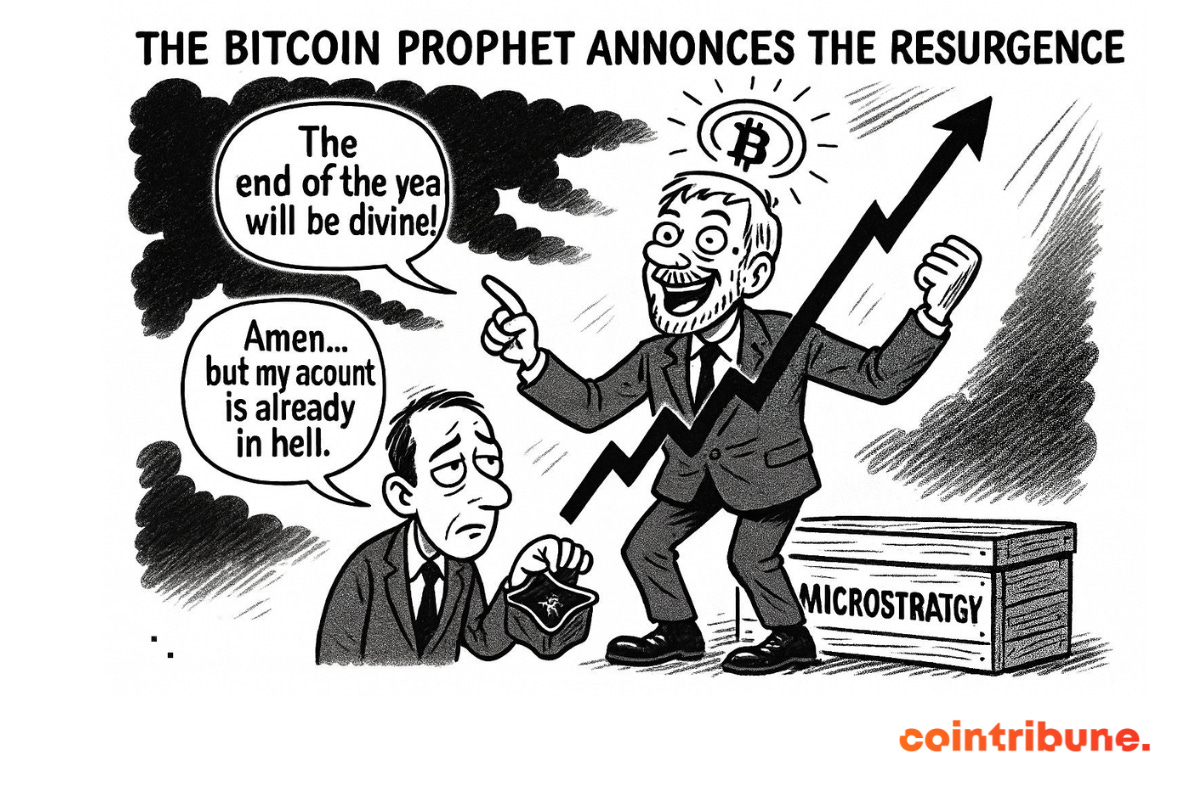
✍️ Cartoon of the day:
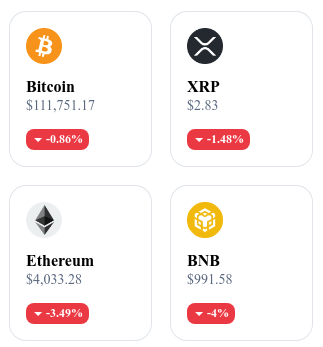
A quick look at the market…
🌡 Weather:
🌧️ Rainy

24h crypto recap! ⏱
📊 Crypto ETF: Ethereum challenges Bitcoin on institutional flows
U.S. spot Ethereum ETFs recorded $680M in net inflows during the week of September 16, 2025, compared to $540M for Bitcoin.
👉 Read the full article
🇺🇸 Only 14% of U.S. investors exposed to crypto
A survey by the SEC and FINRA published in September 2025 reveals that 14% of American households hold digital assets. Millennials and Gen Z represent the majority of this exposure.
👉 Read the full article
🌐 Pantera Capital: a Solana spot ETF could change everything
Pantera Capital believes that a Solana spot ETF, if approved, could attract institutional flows comparable to those of Ethereum. The manager notes that Solana processes more than 100 million daily transactions in 2025.
💰 In 12 months, Bitcoin created 145,000 new millionaires
According to data from September 2025, Bitcoin’s rise enabled 145,000 addresses to reach a valuation of over $1M. The total number of “Bitcoin millionaires” now stands at 373,000 wallets.
👉 Read the full article

📌 Crypto of the Day: Cosmos (ATOM)
Innovation and Added Value 🧠
Cosmos is an ecosystem of independent blockchains designed for interoperability and modularity. Its goal is to build a true “Internet of Blockchains,” where each chain can communicate and transfer assets via the IBC protocol (Inter-Blockchain Communication).
Based on the Cosmos SDK and the Tendermint consensus algorithm, it enables the creation of customized blockchains while ensuring speed, security, and scalability. Cosmos stands out for its ability to connect a large number of sovereign networks without compromising their autonomy.
The Token 💰
The ATOM token plays a fundamental role in Cosmos’ operation. It is used for staking, allowing validators and delegators to secure the network while earning rewards. ATOM holders also participate in governance by voting on proposals related to protocol upgrades and the ecosystem’s strategic direction.
Additionally, the token is used to pay certain fees, reinforcing its practical utility. ATOM therefore combines three dimensions: security, governance, and incentives, directly linked to the rise of blockchain interoperability.
Real-Time Performance 📊
💵 Current Price: 4.06 USD
📉 24h Change: −3.59%
💰 Market Cap: 1,907,822,187 USD
🏅 Rank on CoinMarketCap: #51
🪙 Circulating Supply: 469,679,900 ATOM
📊 Trading Volume (24h): 99,283,864 USD

Bitcoin: Michael Saylor announces an imminent surge driven by institutional demand
Michael Saylor reignites the debate on Bitcoin’s future with a bold statement: BTC is on the verge of a spectacular rebound, fueled by an unprecedented dynamic between supply and demand. The entrepreneur bases his prediction of a price rally by the end of 2025 on a structural market imbalance.
Bitcoin supply under pressure from record demand
According to the founder of MicroStrategy, the daily creation of Bitcoin is no longer sufficient to meet institutional appetite. He estimates that about 900 BTC are issued each day by miners. Meanwhile, publicly traded companies and spot ETFs absorb around 1,755 BTC and 1,430 BTC per day, respectively. Result: a total of 3,185 BTC withdrawn from circulation—well above the available supply.
This situation creates what Saylor calls “structural upward pressure”: if demand persists at this pace, the market will face increasing scarcity. He adds: “Companies are removing more than three times the amount of Bitcoin miners can produce.” This phenomenon could transform market dynamics, with profound implications for investors and users alike.
Toward Bitcoin as a pillar of digital finance?
Beyond the bullish outlook, Michael Saylor envisions a transformation in Bitcoin’s role. According to him, the asset is no longer merely speculative. It would become the foundation of a new digital financial system, serving as collateral for innovative financial products: Bitcoin-backed bonds, structured products, or even tokenized debt instruments.
However, this evolution carries a risk often overlooked: the concentration of supply. If institutions continue accumulating BTC in large amounts, they could control a significant share, reducing market liquidity and increasing their influence over the network. Such centralization goes against the historical principles of decentralization defended by the community.
Saylor’s outlook thus opens the door to broader reflection: in a context where interest rates remain volatile and regulation advances rapidly, could Bitcoin truly become a global benchmark asset without losing its original essence?
