


Hello Cointribe! 🚀
Today is Friday, December 12, 2025, and as every day from Tuesday to Saturday, we summarize the news from the last 24 hours that you shouldn’t miss!
But first…
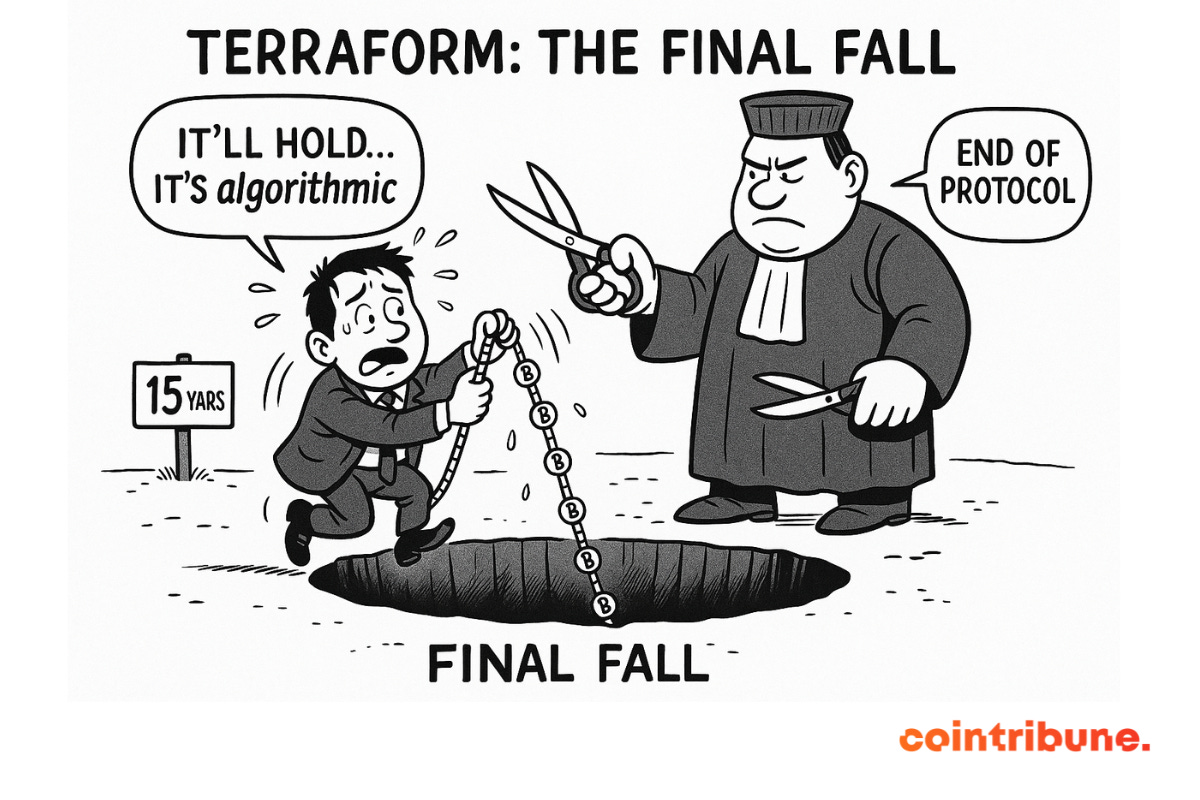
✍️ Cartoon of the day:
A quick look at the market…
🌡 Weather:
☀️ Sunny
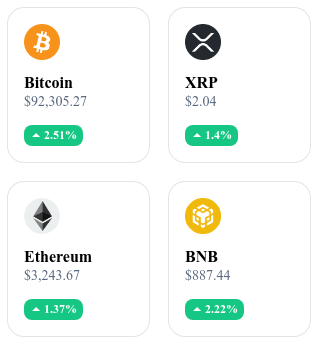

24h crypto recap! ⏱
📚 Read2Earn gets a fresh new look
Read2Earn is back in a redesigned version.
Same principle: you read, you participate, you earn.
But now everything is clearer, faster and more motivating: a modernized interface, better-structured missions, simplified points tracking and a truly more fun experience.
If you liked the first version, you’ll love coming back.
And if you took a break, this is the perfect moment to jump in again — your rewards are waiting for you.

⚖️ Do Kwon sentenced to fifteen years in prison
The court found the founder of Terraform Labs guilty of massive fraud and sentenced him to fifteen years in prison. The ruling sanctions the collapse of the Terra ecosystem in 2022, whose global losses exceeded $40 billion.
📉 Quiet Bitcoin accumulation despite slowdown in corporate treasuries
Data from the fourth quarter indicate a slowdown in official purchases by corporate treasuries, while major players continue their acquisitions. Large investors are taking advantage of this phase to strengthen their off-market positions ahead of a potential return in volatility.
⚔️ Pushback against MSCI’s exclusion of crypto-exposed companies
Index provider MSCI is considering removing from its key benchmarks companies whose treasuries have significant exposure to digital assets. The initiative has sparked strong opposition among industry players, who view the rule as an arbitrary barrier to institutional adoption.
🏦 JPMorgan issues $50M bond on Solana
US bank JPMorgan has officially launched a $50 million debt tokenization operation directly on the Solana blockchain. The transaction involves full settlement in the USDC stablecoin and confirms traditional finance’s growing interest in decentralized infrastructures.

Crypto of the day: Mantle (MNT)
🧠 Innovation and added value
Mantle is a layer-2 blockchain built on Ethereum, designed to improve scalability and reduce transaction costs. The network relies on a modular architecture that separates execution, data availability, and settlement, enabling greater overall efficiency.
Mantle primarily targets DeFi applications, financial infrastructure, and high-volume Web3 projects. The ecosystem benefits from direct support from BitDAO, one of the largest decentralized treasuries, giving Mantle above-average funding and development capacity.
💰 The token
The MNT token plays a central role in the Mantle ecosystem. It is used to pay transaction fees on the network and plays a key role in governance. Holders participate in strategic decisions related to protocol evolution and the allocation of treasury resources.
MNT is gradually replacing the former BIT token within the Mantle ecosystem, simplifying the project’s economic structure. The token’s utility depends directly on network adoption and the volume of applications deployed on the blockchain.
📊 Real-time performance (CMC)
💵 Current price: €1.07
📈 24h change: +10.4%
💰 Market capitalization: €3.48 B
🏅 CoinMarketCap rank: #25
🪙 Circulating supply: 3.25 B MNT
📊 Trading volume (24h): €145.78 M

YouTube integrates PYUSD stablecoin payments for U.S. creators
YouTube is taking a new step at the intersection of the creator economy and digital finance. The platform now allows U.S.-based creators to receive their earnings in PayPal USD (PYUSD), the stablecoin issued by PayPal. This partnership marks a major evolution in creator compensation and in the adoption of stable digital currencies within the Web2 ecosystem.
YouTube enables PYUSD payments for U.S. creators
YouTube has activated the option for creators based in the United States to be paid in PYUSD stablecoin via PayPal. This option relies on the existing payment infrastructure between the two companies, notably for AdSense payouts.
PayPal’s Head of Crypto, May Zabaneh, confirmed that the feature is already live, stating that “YouTube does not have to handle crypto directly.” The integration was therefore designed to remove technical and regulatory complexity, while offering seamless access to digital payments.
This choice reflects YouTube’s strategy of prioritizing simplicity and compliance. Creators can now choose to be paid in a dollar-pegged digital currency without having to manage a crypto wallet themselves. The move builds on a long-standing partnership between PayPal and YouTube, established several years ago around traditional payments.
PYUSD gains traction in institutional finance and attracts Web2 giants
Launched in mid-2023, PYUSD has seen rapid growth. According to CoinGecko data, its market capitalization now stands at around $3.9 billion, up from $500 million in January. This sharp increase is driven by its integration into Spark, a crypto lending market, and Bitfinex Stable, a stablecoin-focused blockchain for institutions.
These integrations position PYUSD among the most widely used stablecoins on the market, backed by a traditional player known for its regulatory compliance.
The arrival of PYUSD on YouTube could play a decisive role in the mainstream adoption of crypto payments. The video platform represents one of the largest creator ecosystems in the world, giving this initiative unprecedented adoption potential.
This move fits into a broader trend: major Web2 companies are gradually integrating blockchain into their services. Stablecoins, combining dollar stability with on-chain transaction efficiency, are becoming the natural bridge between traditional finance and the digital economy.
YouTube and PayPal offer a concrete demonstration of how Web2 tools can integrate blockchain without complicating the user experience. By allowing creators to adopt a regulated and transparent stablecoin, both companies are laying the groundwork for mass adoption of digital finance.
PYUSD could thus become a reference model for other content platforms, while YouTube positions itself as a key player in the transition from Web2 to Web3.
